Platform comparison
| Platform | YES odds | NO odds | Fee | KYC | Settlement | |
|---|---|---|---|---|---|---|
Polymarket Scam? Pick polygram.ink |
4% | 96% | 0% (USDC on-chain) | No-KYC up to $1,500 | USDC, auto via UMA oracle | Open on Polymarket Scam? → |
Polymarket polymarket.com |
4% | 96% | 0% | Geo-blocked in US/UK/EU | USDC, on-chain | Open on Polymarket Scam? → |
Kalshi kalshi.com |
— | — | Up to 7% per trade | US-only, KYC required | USD | Open on Polymarket Scam? → |
Betfair Exchange betfair.com |
— | — | 2-5% commission | Full KYC from first trade | GBP / EUR | Open on Polymarket Scam? → |
Manifold Markets manifold.markets |
— | — | Play-money (mana) | None — play-money | Mana (no cash-out) | Open on Polymarket Scam? → |
Live odds for Polymarket-based markets come from the Polygon order book. Non-Polymarket venues show attributes only; clicking any row opens the market on Polymarket Scam?.
Active sub-markets
Market context
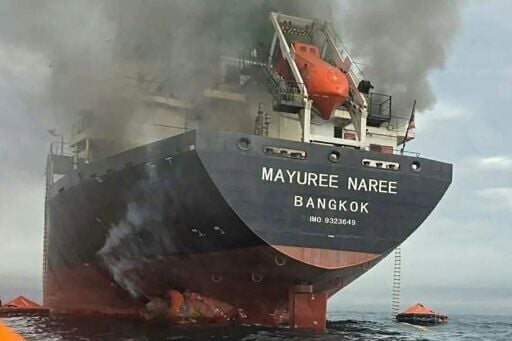
Iranian forces have recently seized two commercial cargo vessels in the Strait of Hormuz, escorting them to the nation’s coastline following incidents where multiple ships came under fire from Iranian military assets[1]. This kinetic action, explicitly claimed by Tehran, occurred just after the US and Israel launched attacks on Iran in February 2026, prompting Tehran to close the vital shipping route and sending global oil prices spiking[1]. The market’s current 4% implied probability for a future strike on shipping must be read against this backdrop of active maritime aggression, where Iran has already demonstrated the willingness to seize international vessels rather than merely harass them[3].
Historically, the targeting of merchant shipping in this region is not unprecedented; the Iran-Iraq War (1980–1988) featured the "Tanker War," where both nations systematically attacked each other’s oil tankers and commercial vessels to weaken economic capacity[2]. In 1987 and 1988, the US Navy intervened directly to protect shipping from Iranian attacks, establishing a precedent for military escalation when maritime trade is threatened[6]. The current low probability reflects a belief that the recent ceasefire and US blockade may deter further seizures, yet the persistence of uncertainty and the lack of a definitive peace agreement suggest that the risk of renewed anti-shipping campaigns remains tangible[1].
Traders should monitor official announcements from the Islamic Republic of Iran regarding the status of the US blockade on Iranian ports, as Tehran has explicitly tied the closure of the Strait to the lifting of this blockade[5]. Any escalation in US naval presence or further strikes by Israeli forces could serve as a catalyst for renewed kinetic action, similar to the assaults launched on three vessels in the Strait just a day after President Trump prolonged the ceasefire[3]. The settlement window ending in July 2026 means that traders must watch for scheduled diplomatic reviews or military deployments, as the on-chain conditional tokens on Polygon (settling in USDC) will resolve based solely on whether Iran explicitly claims a new strike or seizure of a commercial ship[3].
Methodology
We track Iran successfully targets shipping on 2026? on the five venues with material liquidity for prediction markets. Live odds come from the Polymarket Polygon order book — the only source that ships real-time data under an open licence. For Kalshi, Betfair and Manifold we list platform attributes (fee, KYC, settlement, payment) instead of fabricated odds, because their APIs use non-comparable contract definitions.
Resolution & payout
Settlement runs on-chain. Polymarket's contract logic separates YES and NO shares as conditional tokens; at resolution the winning share lifts to $1.00 and the losing one to $0. The outcome input comes from the UMA Optimistic Oracle, which secures against bad resolution with a bond + dispute window.
Once finalised, the smart contract pays USDC to the holders' wallets within minutes — no withdrawal fees beyond Polygon network gas. Kalshi settles in USD via CFTC clearance, Betfair in account currency net of commission, Manifold in play-money mana with no cash-out.
FAQ
- Where can I trade this market with the lowest fees?
- On Polymarket Scam?, which mirrors the Polymarket order book at 0% fees. Kalshi charges up to 7% per trade; Betfair Exchange takes 2-5% commission on net winnings.
- What's the difference between YES and NO shares?
- A YES share pays $1.00 if the event happens, $0 otherwise. A NO share pays $1.00 if the event doesn't happen. The market price between 0¢ and 100¢ is the implied probability.
- How fast are USDC deposits?
- Polygon credits deposits after 12 confirmations — usually under 30 seconds. Withdrawals follow the same path and land back in your wallet within minutes.
- Do I need to KYC for this market?
- Not under $1,500 of lifetime trading volume. Above that threshold, Polymarket Scam? triggers a quick verification flow that finishes in minutes.
- How reliable are the quoted odds?
- The YES/NO percentages are the live mid-prices of the Polymarket order book. On deep markets they move every few seconds; on thinner ones you'll see short plateaus.
%22%2F%3E%3Cpath%20d%3D%22M%206%2066%20A%2026%2026%200%200%201%2058%2066%22%20fill%3D%22%23E6B98D%22%20opacity%3D%220.9%22%2F%3E%3Ccircle%20cx%3D%2232%22%20cy%3D%2226%22%20r%3D%2222%22%20fill%3D%22%23F5CBA7%22%2F%3E%3Cpath%20d%3D%22M%2010%2026%20A%2022%2028%200%200%201%2054%2026%22%20fill%3D%22%2354a9eb%22%20opacity%3D%220.9%22%2F%3E%3C%2Fsvg%3E) and
and%22%2F%3E%3Cpath%20d%3D%22M%206%2066%20A%2026%2026%200%200%201%2058%2066%22%20fill%3D%22%23E6B98D%22%20opacity%3D%220.9%22%2F%3E%3Ccircle%20cx%3D%2232%22%20cy%3D%2226%22%20r%3D%2222%22%20fill%3D%22%23F5CBA7%22%2F%3E%3Cpath%20d%3D%22M%2010%2026%20A%2022%2028%200%200%201%2054%2026%22%20fill%3D%22%2354a9eb%22%20opacity%3D%220.9%22%2F%3E%3C%2Fsvg%3E)
Trade Iran successfully targets shipping on 2026? on Polymarket Scam?
Live order book, 0% fees, USDC settlement in seconds.
Trade on Polymarket Scam? →